
What do I even work on now?
You had a bad tournament. The next day, what do you actually do?

I posted this Substack Note and got a variety of comments, such as
“Learn how to study the game in an organized fashion.”
“Don’t put off training for tomorrow, that can be done today.”
“Take your training more seriously now since the older you get, the harder it gets to find time to work on your game and improve”
I like each of these, but for me it would be “analyse your own games and work on what they tell you to.”

I had the immense fortune of finding chess when I was a kid and being able to play many tournaments throughout my life: around 1,800 classical tournament games over 25+ years, countless wins and losses inside them.
But for many years, I didn’t like going over my games because I didn’t know how and dissecting every move felt overwhelming. Looking back, I wish I’d learnt how to learn from my own games in a clear and sustainable way much earlier.
Especially after losing, I’d often bottle up the pain and disappointment, maybe have a quick look through the game and feel annoyed at myself.
Why did I blunder?
I just need to know this opening better.
How could I have missed that tactic?
I got too low on time again.
I’d go back to solving random tactics and playing blitz, make a plan to do calculation exercises every day and succeed for two days, buy another opening course and feel like I’m moving forward, click through master games online and pretend that I’d learnt something.
In the end, I’d always go back to the same random routine, never work on the weaknesses in my game, and feel angry and frustrated at myself with every loss and every bad tournament. Why am I not improving, even after spending so much time on chess?
Maybe you’ve felt that too. At night after a bad tournament, you’d go to bed, run through the mistakes you made, how you should have prepared in a more organised way, have a better daily routine…you tell yourself you’ll figure out how this time, and turn the light off.

The day after
On the day after a tournament, especially if you weren’t happy with it, that’s when you might decide how you’ll work on chess until the next tournament. And this particular window of time, the day after, is what I want to talk about today.
You care about improving and you’re ready to do the work. But you have no idea where to aim it, because your chess has so many issues: opening, middlegame, endgame, tactics, strategy. And those are just the broad categories. Where do you even start?
I lived in that day after for many years, asking myself “What do I even work on now?” but never having a clear answer.

Some people think every master had it all figured out from when they were young, but that’s far from the case. I started playing classical OTB around the age of 8 or 9, I read chess books pretty much every day, I had a coach, I played tens of thousands of games online, and I followed the top tournaments for years. Chess was the biggest thing in my life for a large part of 25 years.
But for most of those 25 years, I could not have told you with any confidence what my last serious game was trying to teach me. I’d find the blunder, feel bad about the blunder, then I’d go straight back to playing blitz or bullet, clicking through master games and consuming chess books without reflecting on what my chess actually needs.
My mistake was that I treated every loss as a result to get over. Every one of them was a message about my chess, and instead of opening the floating bottle just out of arm’s reach, I’d walk away from it. [cue scene from Interstellar where I’m looking at my past self wasting time on random study year after year]

What do I work on now? What should have I been working on? What should chessplayers be working on?
Reality eventually caught up to me, I wasn’t in my teens or 20s any more, it was time to face my weaknesses and build better habits. It was a huge struggle to change my habits, both as a chessplayer and as a person, but now that I’ve done so over the last few years, I feel confident that I’m spending time on what I should be and I’m finding the joy in chess again that can’t be spoiled by losses or bad tournaments.
15 years, the same answer
In 15 years of coaching, I’ve rarely met an improver who was stuck because they were lazy. They’re often stuck because what they study and train have nothing to do with what goes wrong when they play.
They work hard but on the wrong things, and then wonder why the same problems keep turning up game after game, 3 months after and 6 months after the problems were first identified.
Sticking with playing blitz or solving random puzzles every day won’t fix that. What you need is a way to turn what your games show you into what you train next week.
That’s what I’ve spent hundreds of hours over the last five months building.
The 10-Habit Chess Improvement System is a video course: 10 connected habits across 12 chapters, for players who play chess seriously and still don’t know what to work on. It turns your own games into clear lessons, focused training and better decisions in your next game.
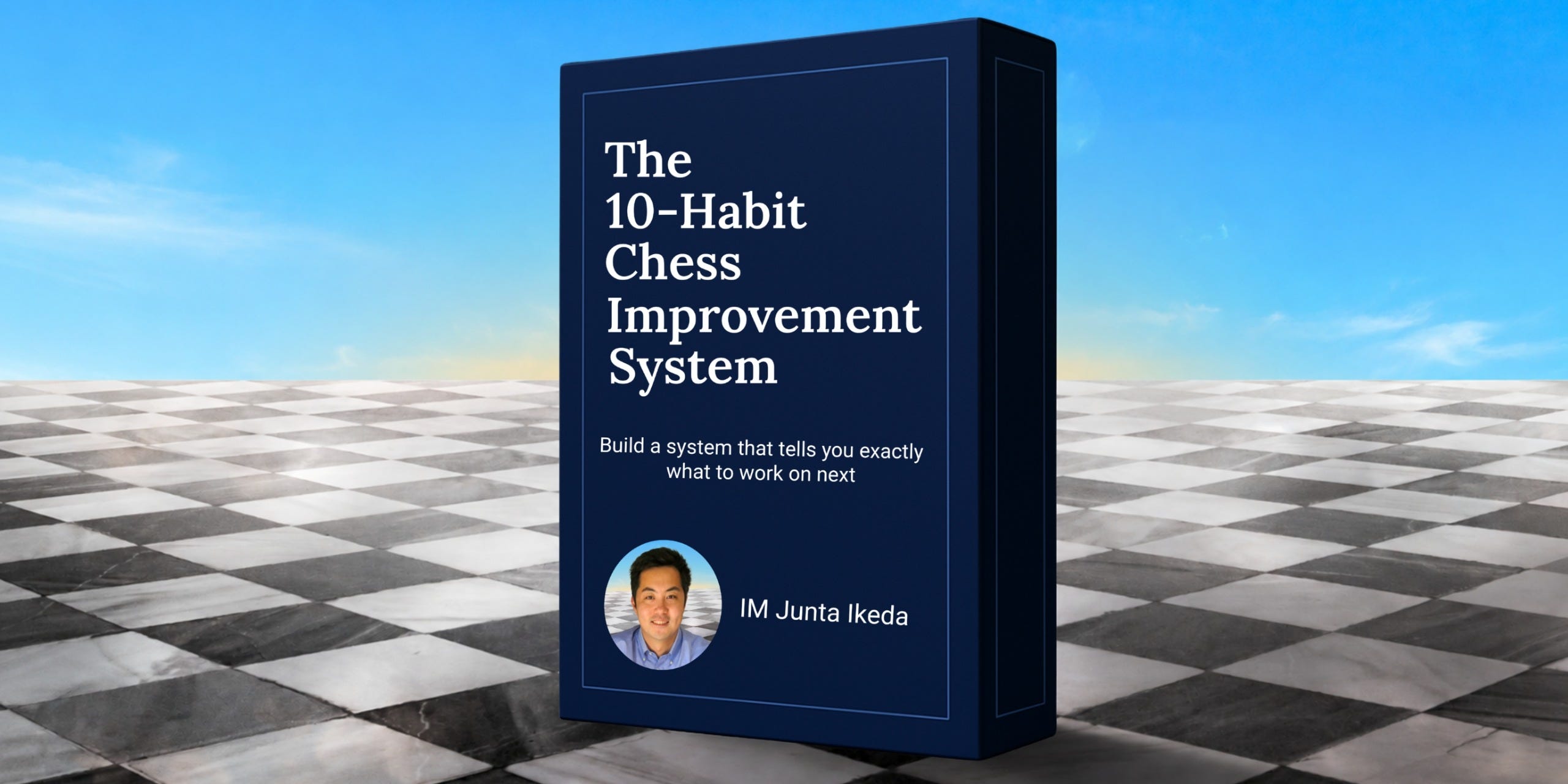
So the question you ask yourself the day after a tournament finally has an answer.
Your games are already telling you what to fix. You just have to be listening when they do.
These five months, working on this every day before and after work has been an experience like no other, and I’m really excited to open it to you in a few days.
[now available here]
To accept one’s past—one’s history—is not the same thing as drowning in it; it is learning how to use it. An invented past can never be used; it cracks and crumbles under the pressures of life like clay in a season of drought.
—James Baldwin, The Fire Next Time
Good morning, are the videos subtitled or are there any plans to add them? It would be very difficult for someone who isn't a native English speaker. Thank you.