
Emulate someone you admire
Chess advice from a professional guitarist

In late 2024, I interviewed a Japanese guitarist, Riki Takahashi about improvement1. He also plays chess. When I asked what the first essential ingredient for getting better was, his answer was admiration rather than time, motivation or goal-setting.
He spoke about how, in his own musical life, there were two periods where his improvement accelerated dramatically. They were when he had a powerful sense of admiration for someone.
As a teenager, hearing Paul Gilbert for the first time felt, in his words, like being struck by lightning. That desire to get closer to someone far above him wasn’t a measurable goal; it was a pull.
Later, after switching to classical guitar and feeling adrift for years, he experienced the same shock when hearing Alí Arango perform in Spain. Practice became enjoyable again because it was guided by a clear sense of “this is what I want to sound like”.
That idea resonated immediately with my own chess education.
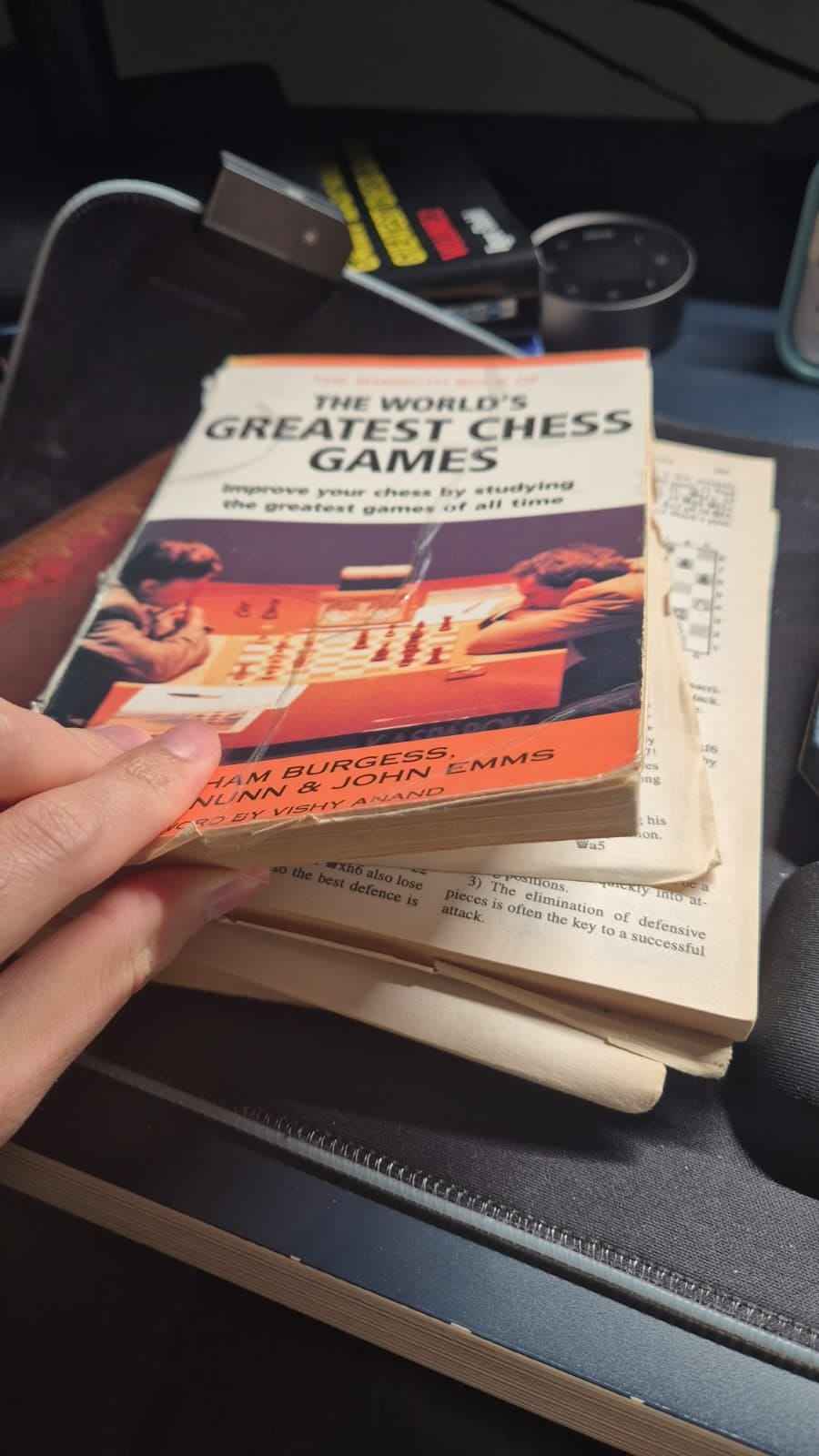
One of the most formative books for me was The Mammoth Book of the World’s Greatest Chess Games (Burgess, Emms and Nunn).
It showed me the sheer depth and breadth of chess and that we’re connected to centuries ago through the moves that were played and the players who found purpose in the 64 squares just like us. A sense that chess mastery had history, personality and wildly different expressions of brilliance. That alone expanded my horizons.
Later, admiration became more specific.
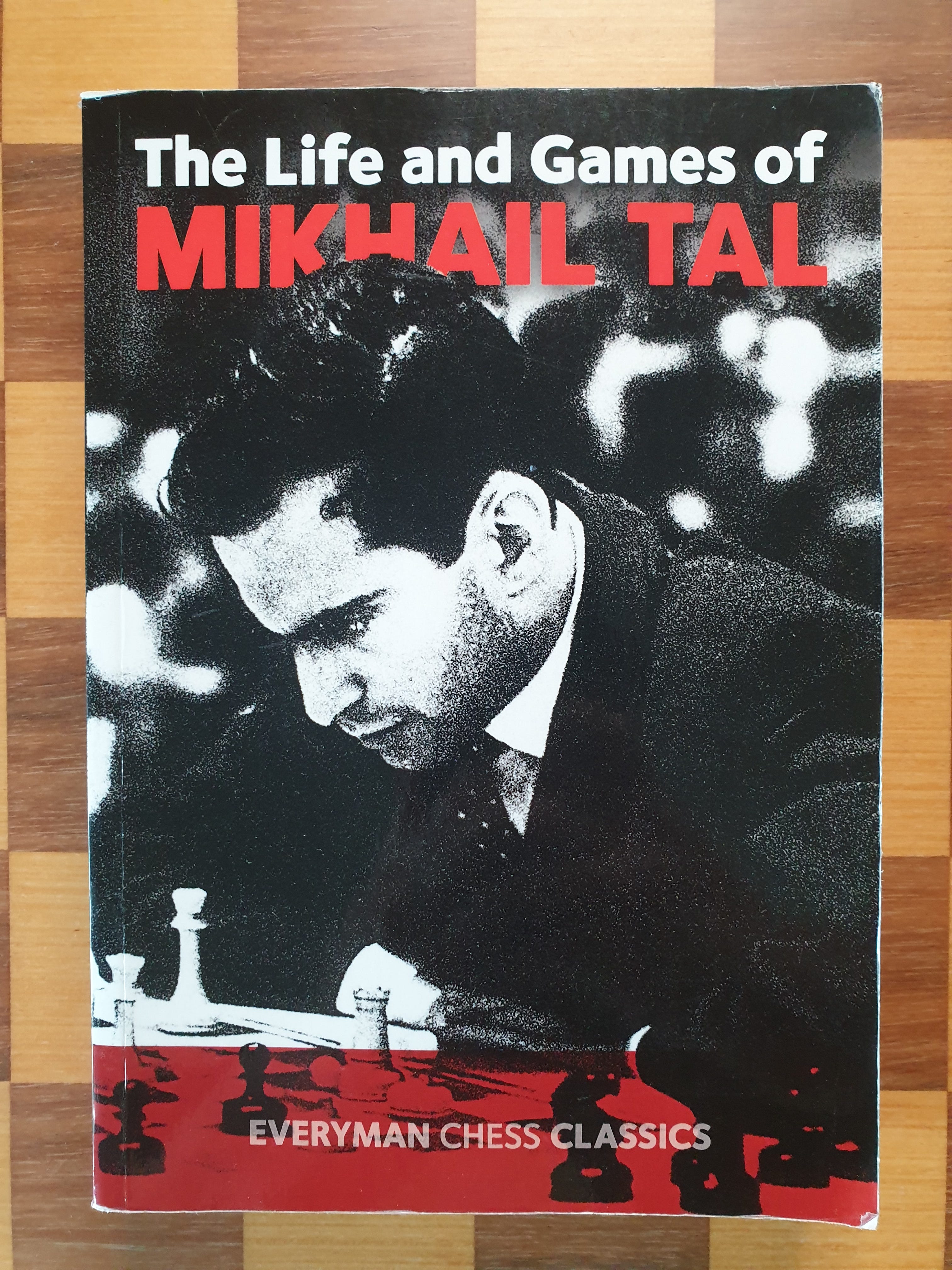
Mikhail Tal gave me permission to value initiative, imagination and taking your opponent into a deep, dark forest. Believing in your own wild ideas.
I spent long stretches playing through his games and guessing his moves because I genuinely wanted to put myself in his shoes and learn from his magic.
With Alexander Morozevich, it was harder to articulate.
His chess had a kind of inner logic that often didn’t align with classical principles, yet you can feel its incredible depth. Infinitely creative. Uncompromising. Rich.
To me, it felt like he was playing a completely different game that somehow still worked at elite level. I wanted to study his games to absorb a philosophy or style that I saw as ideal. The Tal Memorial in 2012 was the only time I felt emotional, even heartbroken following a top tournament.
What we respond to in any work of art is the artist’s struggle against his or her limitations.
—Saul Steinberg
At other times, admiration was more pragmatic. When I wanted to build a dynamic 1.d4 repertoire, Shakhriyar Mamedyarov became a model player. When learning a new opening I often find a player who’s played it extensively in a style I like and treat them as a reference point. I’d play through their games, guess their moves and see where my instincts diverged from theirs.
This kind of study does something subtle. You start by imitating but you don’t just absorb what you’re consciously looking for. You also pick up the positional factors they prioritise, their handling of quiet positions and their endgame decisions. All of that seeps in because you’re engaged. You care. You aren’t forcing yourself through games out of discipline. You’re drawn in because it’s chess you want to play.
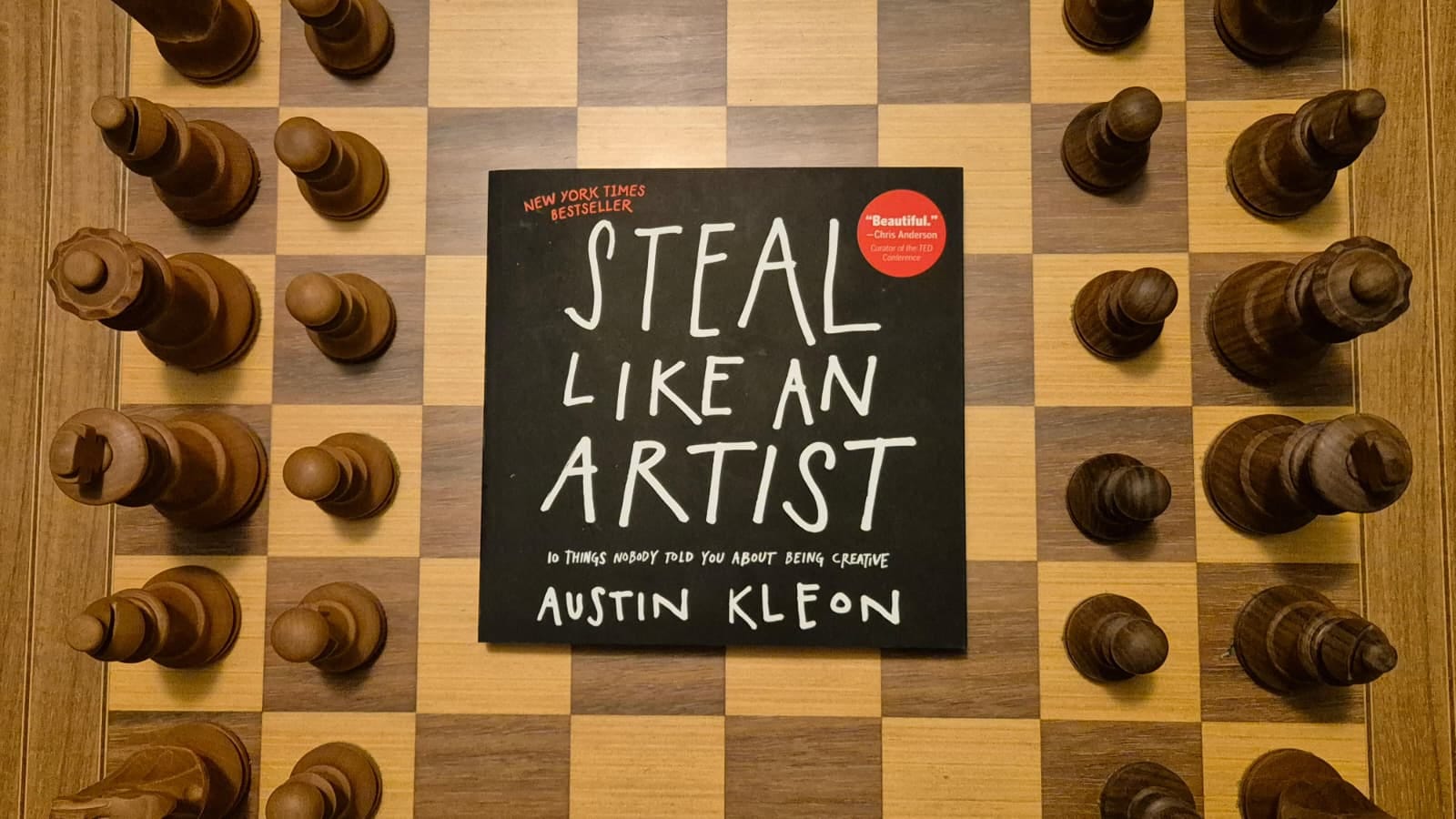
A lot of learning starts with imitation, and I don’t think that’s bad. Style tends to emerge later once your foundation is strong enough to support it. Having role models gives direction to your effort and more colour to your training.
So I’ll leave you with a question.
Do you have someone you genuinely admire for their chess? And if you do, have you ever tried this kind of training, playing through their games, guessing their moves, living inside their decisions for a while?
We strive all the time to give our life its form, but we do so by copying willy-nilly, like a drawing, the features of the person that we are and not of the person we should like to be.
—Marcel Proust, The Guermantes Way (In Search of Lost Time #3)
I’ve always liked looking outside of chess when I think about chess improvement.
Ideas from other fields sometimes hit something more fundamental, bypassing the usual chess clichés. Occasionally, an insight from music, writing or sport explains a chess truth more cleanly than anything in our chequered universe.
So true Junta
Take Care Be Well
Gordon